The business school where everyone is a minority
Content

Over the course of almost 20 years, Mary Granger has seen huge changes at Esade. It has gone from 45% to 95% international students, from no dedicated MBA careers team to a huge team of professionals, from attending education fairs abroad (with a one-page flyer) to being there virtually over Zoom. That last change, in particular, excites Mary:
“You feel like you can reach a much wider audience much further away. You don’t have to focus only on the main city in every country. People used to travel thousands of kilometers to come to the fairs – they don’t have to do that anymore. And that’s exciting.” (04:24)
Even the food options in the cafeteria have evolved along with the school.
“I remember talking to the guys in the cafeteria and saying we need to have some vegetarian options. Then the following week I went in and saw beans and ham [as the vegetarian option]. I said, ‘Well this has got ham!’ and they’d reply: ‘Yeah, but if you put that to the side then it’s just beans…,’ she laughs. “From that, I went in the cafeteria seven or eight years ago and found that they have chopsticks available for anyone who wants to use them instead of utensils. So it’s a huge change in every aspect.” (06:57)
It’s a story that seems trivial at first, but perhaps it symbolizes the changing face of a global business school.
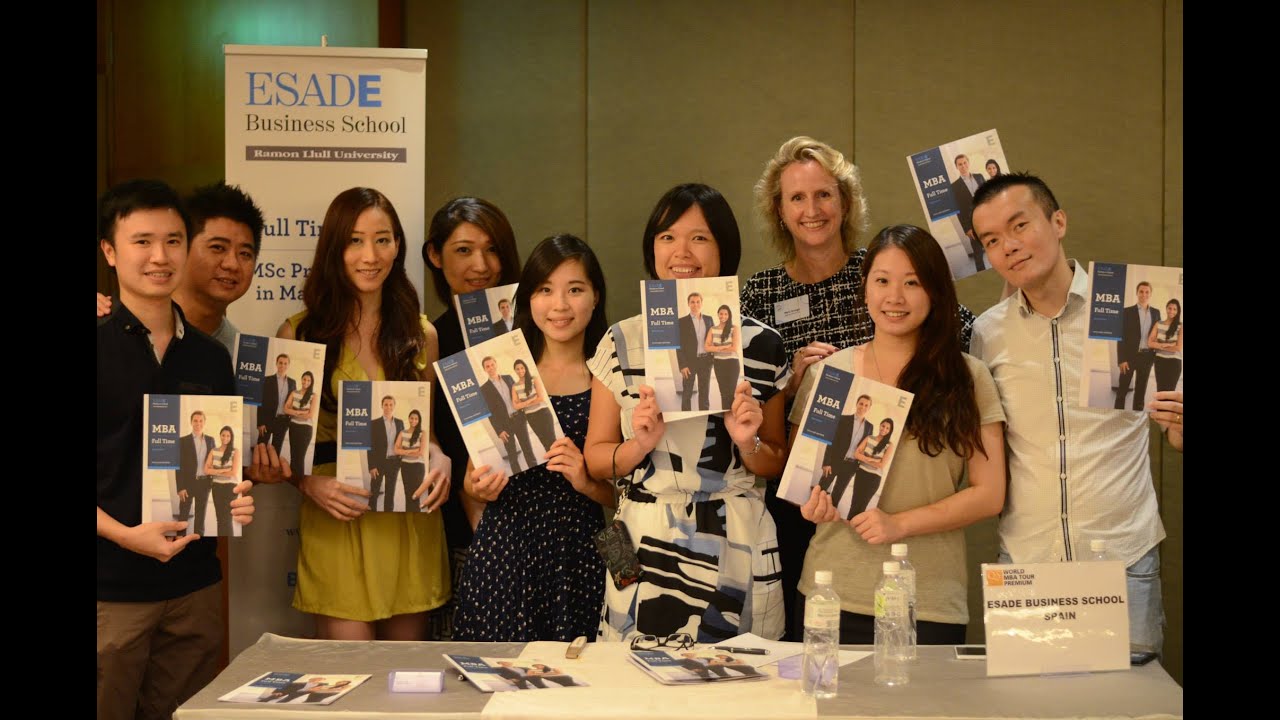
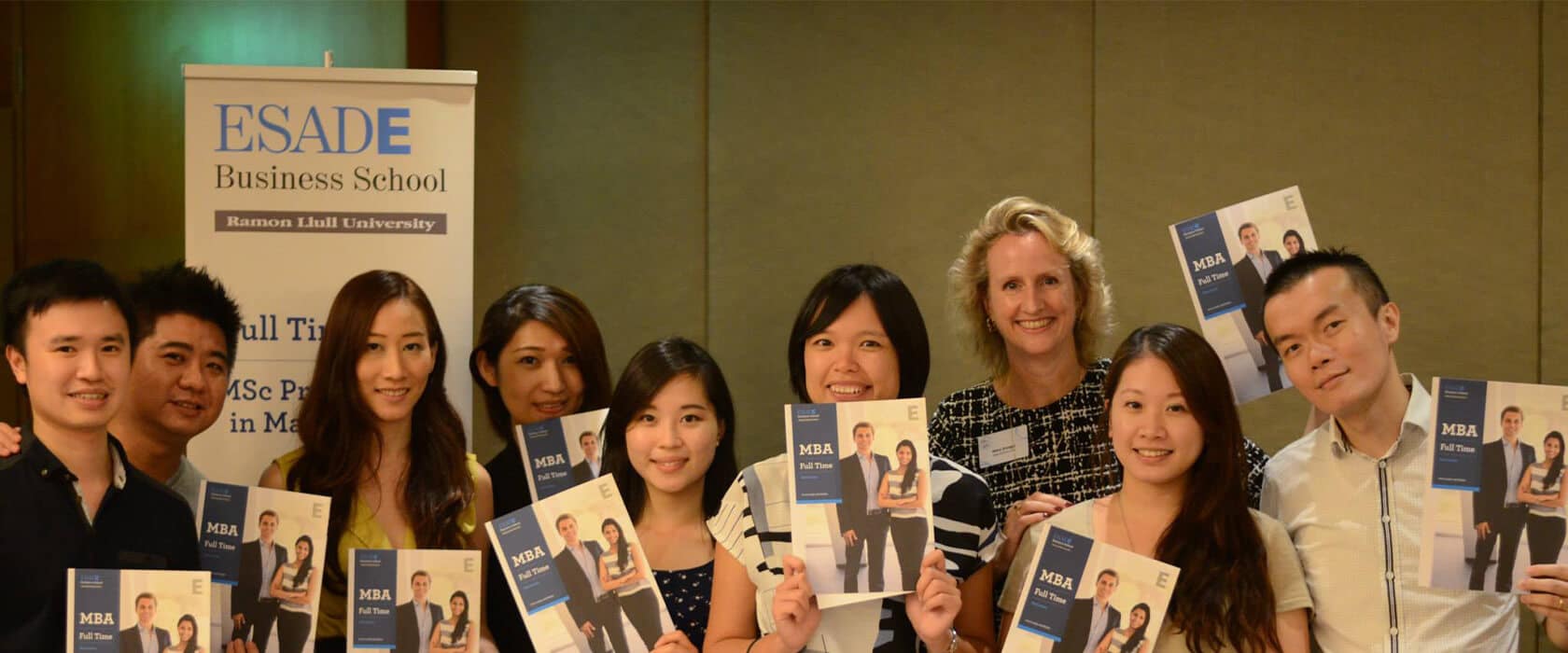
With an international student population of 95%, Esade is like a mini-United Nations. But careful efforts are made to ensure no region or country is overrepresented. Mary sees it as an important part of the school’s diversity.
“We try to not have more than 15-20% from any region or country. So we try to keep it as diverse as possible…what is cool about that is no one’s a majority, everyone is a minority,” she explains. (08:26)
Despite the wealth of identities, language, and cultures at Esade, the school manages to maintain a family feel. This is in part due to their extensive network of alumni, who stay connected to the school long after graduating.
“Esade is small enough for people to describe it as a family, and I think that’s the closest explanation I can give as well, ” Mary says. “There’s a huge support system available for people on and off-campus, the alumni are amazing, and they’re there for the other students.” (19:33)
As the Esade Regional Director for Asia, Mary is aware of the issues that arise when recruiting a diverse pool of talent. One is the different attitudes towards education in each region. For example, in Asia, the mantra of the education system is: “Don’t bother the professor, don’t ask questions.” (12:30) But at Esade, students are expected to participate at every opportunity.
“[Our Asian students] aren’t allowed to sit back and just enjoy the ride. If they’re not participating, we’re going to call on them, just like we do with everyone else from every other region. It’s very different from most undergraduate classes,” she affirms. (09:40)
Esade tries to mitigate cultural differences between Asia and Europe through their admissions process. When it comes to admitting new students, their ultimate aim is to find ones who can make a positive contribution to the school.
“We spend a lot of time with each candidate and we don’t just look at the numbers,” Mary says. “We’re not a numbers-driven admissions committee. Yeah, you have to have a GMAT that shows us you can do the work, but we’re really focusing a lot on what is going to be the student’s unique contribution.” (11:24)
Esade’s approach is so international that, as Mary puts it, “everything we do is for international students.” (17:37) That means opportunities like scholarships are open to everyone, instead of only being for certain groups or nationalities.
“We don’t have scholarships just for nationals…we have scholarships that are available to the entire pool of candidates, so we encourage people to apply for them,” Mary confirms. (17:40)
All of this is helping to shape a student population that is quite different from other schools. Instead of fitting into national stereotypes, the ones who make it here all share the Esade DNA of togetherness, a willingness to participate, and an openness to diversity.
“Our American students aren’t typically American, our Asian students aren’t typically Asian, our German students aren’t typically German…the students that come to Esade are looking for something different than a traditional MBA.” (25:24)
In just 2 minutes, find out if you meet the entry requirements at Esade.
Take the quiz
Everything you need to know

Artificial intelligence (AI) is reshaping executive leadership, demanding a new balance between innovation, ethics, and long-term impact. Discover why responsible leadership demands a tech-based approach. Tech-forward leaders are becoming a competitive advantage, and the pioneering emba X joint program between ETH Zurich and St.Gallen combines technology, sustainability, and leadership development to deliver future-ready graduates.
October 05, 2026
Harvard Business School created the Foundry program, an AI-native venture platform, and "The Founder Mindset with Reza Satchu" podcast to widen access to entrepreneurial education. Through an eight-week virtual bootcamp, university partnerships, US$100,000 Catalyst funding, and high-production founder interviews, this HBS initiative supports diverse entrepreneurs across the U.S. with hopes of expanding internationally.
September 30, 2026
The Summer Growth Guide 2026 is a self-reflective workbook created by Nyenrode Business University to facilitate personal and professional development over six weeks. Each week focuses on a specific pillar of development, including experimentation, courage, creativity, decision-making, and purpose. Using prompts and exercises, the free guide encourages readers to replace rigid planning with curiosity and active learning. Ultimately, the guide helps individuals to identify meaningful next steps in their career and life journeys.
August 10, 2026Georgetown’s McDonough School of Business is preparing leaders for an AI-driven world. In addition to the technical skills needed to stay ahead, McDonough MBA students are given the ethical framework to navigate the AI era. Associate Dean of MBA Admissions, Anne Kilby, explains the power of this exceptional MBA.
August 03, 2026
Triple Crown-accredited and set in one of the UK's most vibrant cities, the University of Liverpool Management School offers a standout MBA experience, including the world's only Football Industries MBA, at a fraction of London's cost of living.
July 10, 2026
Explore how the Oxford MBA integrates AI tools and strategy into the spheres of media, marketing, and beyond. Senior Fellow in Management Practice, Dr. Alex Connock, explains the importance of tool facility, human empathy, and deep vertical expertise for the next generation of business leaders navigating the rapidly evolving landscape of generative AI technology and its impact on the global industry.
June 22, 2026
Explore how SDA Bocconi School of Management integrates artificial intelligence into the classroom and industry. From marketing transformation to sales excellence, discover a leadership paradigm in which technology acts as an ally, not a substitute. SDA Bocconi’s approach amplifies human creativity, empathy, and strategic responsibility to shape the future of global business governance.
June 12, 2026
The ROI of an MBA extends far beyond first-year salary. While GMAC reports median starting salaries reaching $125,000, the true returns include career mobility, global exposure, and lifelong networks. Companies like Nike and Grubhub were founded by MBA alumni. The question isn't whether an MBA pays off in the end, it's how to maximize it.
June 05, 2026