-
Popular search terms

The key question that defines the HKUST MBA
How will technology change work in the future?
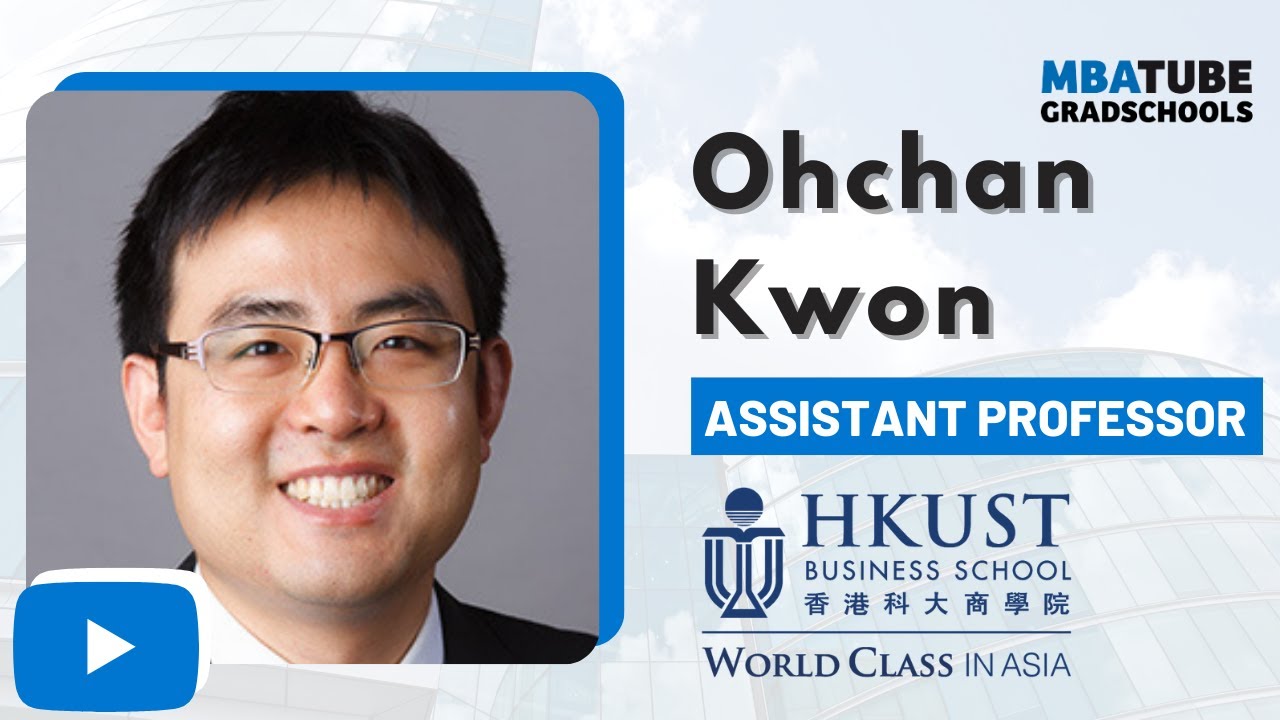
That’s one of the key questions underpinning the MBA program at HKUST Business School in Hong Kong. By giving students the tech skills they need to thrive in a digitized world, HKUST aims to future-proof their careers. One of the professors responsible for overseeing this is Ohchan Kwon.
“I’m interested in studying how technologies, and especially digital technologies, are affecting businesses and society,” he says. “I’m excited about doing research and also teaching some of the related stuff to both undergraduate and MBA levels here in HKUST.” (00:15)
Ohchan teaches two courses within the program. They may cover slightly different topics, but in essence, both are trying to answer the same question we outlined earlier.
“For MBA students, I’m teaching two courses. The first course is tech entrepreneurship. The second course is a brand new course I’m going to teach next semester called AI and the future of business,” he adds. (02:18)
The role of digital technology and AI in business
Traditionally, MBA programs teach students the fundamentals of business: marketing, economics, accounting, management, and leadership. So, how does the HKUST MBA marry these business fundamentals with new technological innovations? Ohchan believes his role is to show students how they can bridge the gap between these two areas.
“New digital technology is what a lot of people are interested in these days. Artificial Intelligence (AI) is another area that people are interested in learning more about. And I think people usually do not think that there’s a gap between these new technologies and other business fundamentals,” he explains. (03:46)
“But, in many cases, if you are creative and flexible, you can always apply some of the lessons that you are learning and the fundamental kind of perspective and tools in your context,” he adds. “My unique role here is to show students how to apply the business fundamentals in new contexts such as digital technologies or AI.” (04:08)
One of the biggest challenges for business schools is simply keeping pace with this rapid technological change – and that change is affecting some industries more than others. In Hong Kong, it is perhaps most visible in the region’s largest and most famous industry.
The changing face of Hong Kong’s finance industry
According to the Global Financial Centres Index, Hong Kong is the third-biggest financial center in the world, behind only New York and London. Because of Hong Kong’s reputation as a global financial center, Ohchan believes that “the finance industry is where a lot of our MBA graduates want to join after graduation.” (06:24)
Finance is one of the industries seeing widescale change as a result of technology. With the fintech industry expected to mushroom into a $324 billion market by 2026, MBA graduates hoping to break into finance simply can’t ignore it. Ohchan says HKUST is shaping its MBA program around these changes, and students are responding to it.
“In a sense, finance is an area where we are seeing the biggest and broadest impact of these new technologies. I think here at HKUST, a lot of MBA students didn’t used to think about developments in tech,” he tells us. “But because these new technologies are going to reshape the finance industry, I think people are very excited and very curious to think about what they can do to prepare their careers in the future.” (08:08)
How does the HKUST MBA future-proof the career of its students?
For Ohchan, the HKUST MBA is all about giving students a long-term competitive advantage in the job market. “I want them to understand that this is an area that’s experiencing a lot of change. I expect that there will be fundamental changes to the industry that will totally reshape it in the coming years. So, for many of them, this two-year MBA program is the best way to prepare themselves so that they can be competitive 10 years after graduation,” explains Ohchan. (12:13)
Being able to secure a job after graduation is, of course, extremely important for prospective MBA students. It’s a huge selling point for business schools and one of the first things people look at when searching for an MBA. However, Ohchan says that while this is important, it’s just as important to find an MBA that can equip you with a broad skill set – one that helps you adapt to change.
“I believe the ability to think about this new technological environment, and learning how to apply their business insight in this new context, will be very important,” he states. “I want students to think about that angle a little more. Getting a job is important, but you also need some broader perspective about improving your capabilities.” (13:16)
It is this long-term focus that sets the HKUST MBA apart as a top-ranked program. Technology is rapidly changing the way we work, and your ability to respond to those changes will determine how successful you are in your career. Whichever industry you’re hoping to break into, the HKUST MBA equips you with the skills and knowledge you need to not just adapt to change, but thrive.
Discover the school that fits your needs!
Take our personalized quiz. Just 2 minutes to connect with schools that match your needs, learning style, and ambition. Ready to find your perfect match? Take the School Finder Quiz and discover the schools that are right for you.
Start hereShare this article
Everything you need to know
Related articles

The C-Suite Isn’t Immune To Tech Literacy. Your EMBA Shouldn’t Be Either. Here’s Why Today’s Executives Need a Tech-Forward EMBA
Artificial intelligence (AI) is reshaping executive leadership, demanding a new balance between innovation, ethics, and long-term impact. Discover why responsible leadership demands a tech-based approach. Tech-forward leaders are becoming a competitive advantage, and the pioneering emba X joint program between ETH Zurich and St.Gallen combines technology, sustainability, and leadership development to deliver future-ready graduates.
October 05, 2026
Everything It Takes To Be a Founder Is Teachable: Scaling the Founder Mindset and the HBS Foundry Ecosystem
Harvard Business School created the Foundry program, an AI-native venture platform, and "The Founder Mindset with Reza Satchu" podcast to widen access to entrepreneurial education. Through an eight-week virtual bootcamp, university partnerships, US$100,000 Catalyst funding, and high-production founder interviews, this HBS initiative supports diverse entrepreneurs across the U.S. with hopes of expanding internationally.
September 30, 2026
Level up this Summer with the Nyenrode Summer Growth Guide
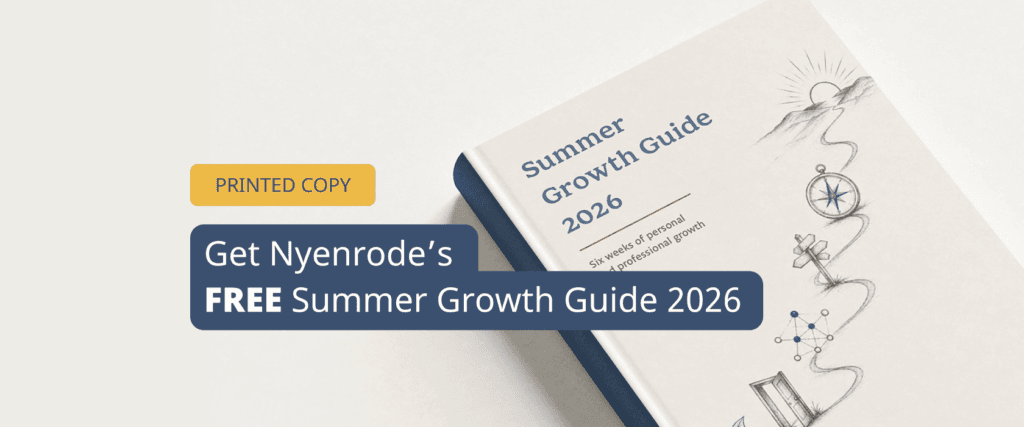
The Summer Growth Guide 2026 is a self-reflective workbook created by Nyenrode Business University to facilitate personal and professional development over six weeks. Each week focuses on a specific pillar of development, including experimentation, courage, creativity, decision-making, and purpose. Using prompts and exercises, the free guide encourages readers to replace rigid planning with curiosity and active learning. Ultimately, the guide helps individuals to identify meaningful next steps in their career and life journeys.
August 10, 2026Is an MBA Still Relevant in the Age of AI?
Georgetown’s McDonough School of Business is preparing leaders for an AI-driven world. In addition to the technical skills needed to stay ahead, McDonough MBA students are given the ethical framework to navigate the AI era. Associate Dean of MBA Admissions, Anne Kilby, explains the power of this exceptional MBA.
August 03, 2026
The World’s Only Football Industries MBA: Inside Liverpool’s Unique Program
Triple Crown-accredited and set in one of the UK's most vibrant cities, the University of Liverpool Management School offers a standout MBA experience, including the world's only Football Industries MBA, at a fraction of London's cost of living.
July 10, 2026
The Oxford Saïd MBA: Leading with AI in Media, Marketing and Business
Explore how the Oxford MBA integrates AI tools and strategy into the spheres of media, marketing, and beyond. Senior Fellow in Management Practice, Dr. Alex Connock, explains the importance of tool facility, human empathy, and deep vertical expertise for the next generation of business leaders navigating the rapidly evolving landscape of generative AI technology and its impact on the global industry.
June 22, 2026
How SDA Bocconi Is Governing the AI Revolution in Management
Explore how SDA Bocconi School of Management integrates artificial intelligence into the classroom and industry. From marketing transformation to sales excellence, discover a leadership paradigm in which technology acts as an ally, not a substitute. SDA Bocconi’s approach amplifies human creativity, empathy, and strategic responsibility to shape the future of global business governance.
June 12, 2026
MBA ROI in 2026: What Is Your Degree Really Worth?
The ROI of an MBA extends far beyond first-year salary. While GMAC reports median starting salaries reaching $125,000, the true returns include career mobility, global exposure, and lifelong networks. Companies like Nike and Grubhub were founded by MBA alumni. The question isn't whether an MBA pays off in the end, it's how to maximize it.
June 05, 2026