How Harvard Business School Is Integrating AI Into Its MBA Curriculum
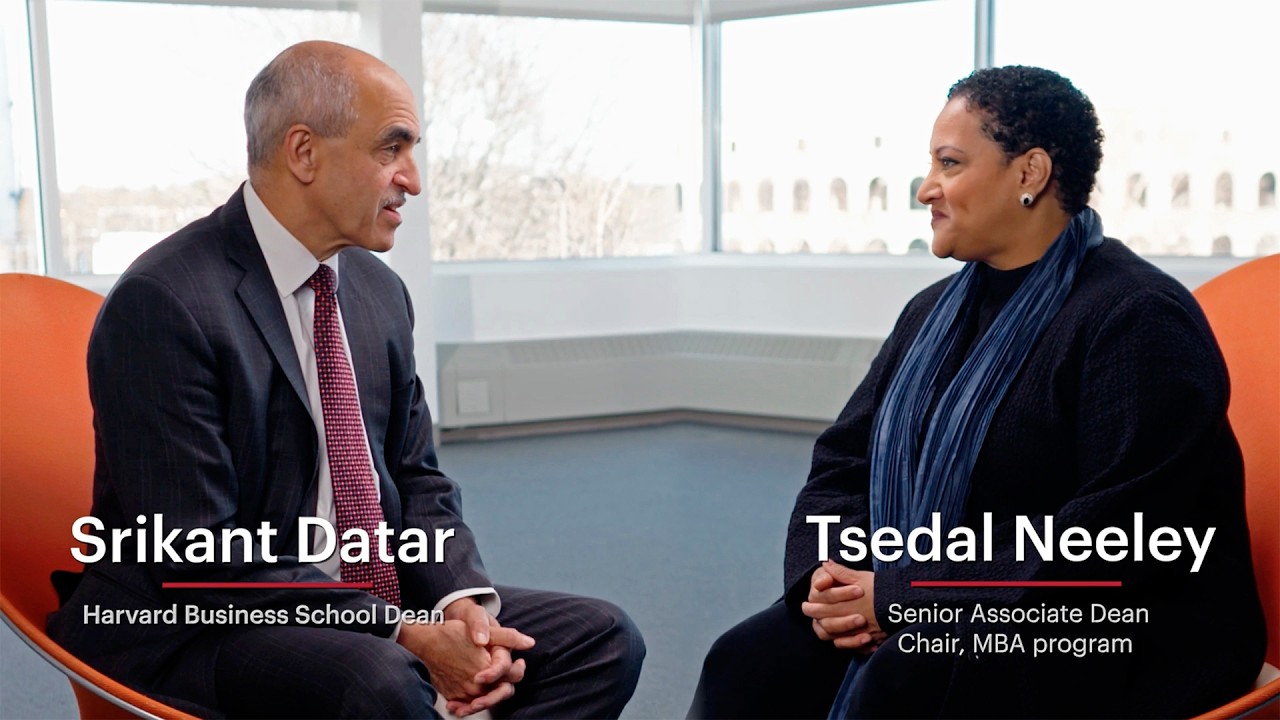
AI is rewriting the rules of higher education, and MBA programs are racing to keep up with technology trends. However, Harvard Business School (HBS) is ensuring its MBA graduates are ready to lead change at the front by holistically integrating AI into the HBS MBA program. In a recent interview organized by Harvard Business School, Dean Srikant Datar shared exactly how the HBS MBA is taking a proactive AI approach.
Moving Forward to the Future
Located in Boston, U.S., HBS has shaped business education since 1908. It is globally renowned for its rigorous Case Method, influential alumni network, and mission to develop ethical leaders who make a positive difference in the world.
Currently, the school is taking another significant step forward. It is embedding AI and data science directly into its core MBA curriculum. The HBS MBA prepares leaders to understand AI and lead alongside it across industries.
Dean Datar shares, “We need to prepare our MBA students to be leaders in the digital transformation and artificial intelligence era. Because leaders will need to understand how to use, scale, and govern AI. But also how to think about issues like privacy and security. So that when we are using AI, we are using it in the most powerful ways that can benefit society.” (00:22)
By helping MBA students to understand and also implement AI in a variety of ways, they are best prepared to lead with it in the future.
Active Learning at Its Finest: The Case Method
Dean Datar notes, “The Harvard Business School has one of the most rigorous and influential academic programs, and it is grounded in the Case Method. What the Case Method does is provide you with this amazing faculty experience with a pedagogy that involves a lot of active learning.” (00:02)
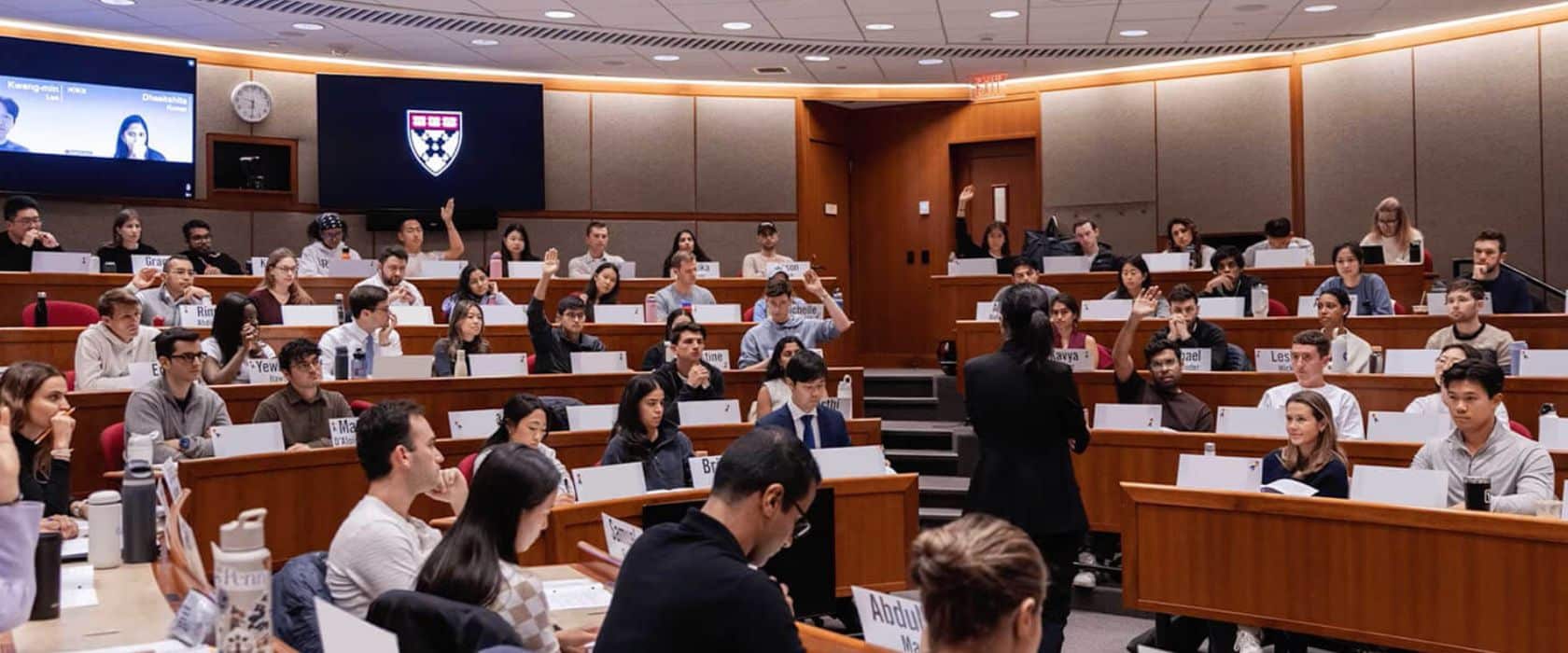
The Case Method is integral to the HBS MBA experience. In essence, the Case Method centers on a dynamic and diverse classroom setting led by student discussion. It is a more interactive or “lean-forward” learning approach. It goes beyond traditional lecture-style classes, in which students are more passive.
With the Case Method, students learn from a diverse group of peers as well as a professor. Over the two-year MBA program, HBS students read and discuss over 500 case studies based on established organizations and real-world business challenges.
The Case Method follows a four-step process:
- Students read the case and must decide on a course of action.
- Students discuss the case with a small and diverse group of classmates.
- Students discuss the case study in class, guided by a professor but driven by student input.
- The final reflection takes place, prompting students to identify solutions.
This hands-on, active-learning process prepares HBS MBA students for challenging and ambiguous future scenarios. This is particularly important in a world that requires future leaders to grapple with complex global AI, ethics, sustainability, and social challenges.
With practice, HBS MBA graduates learn to act with confidence under pressure, make effective decisions with limited information, and lead with clarity when the time comes for the real deal.
Hands-On Experiences Bring Learning Off the Page
Senior Associate Dean and Chair of the MBA program, Tsedal Neeley, further adds, “One of the things that is so powerful about our program is that the doing part helps our students become builders, makers, and founders. This is really important. They can take some classic problems that organizations are facing, and they can devise solutions using all of these AI tools and technologies.” (00:53)
The hands-on learning or “doing part” in the HBS MBA goes beyond just the Case Method. It also includes the Field Method, which complements the Case Method. In the Field Method, students apply their learning in experiential field programs.
For example, in the FIELD Global Capstone, students complete a one-week immersion at a partner company’s location to tackle a product or service challenge. Moreover, Immersive Field Courses (IFC) are elective classes that offer a real-world learning opportunity off-campus.
All of these intertwined elements make for a truly Global Experience, from the varied case studies discussed in class to the diverse cohort to the projects completed abroad. This prepares students for international careers as well as global challenges.
Tsedal adds, “It’s a way of thinking and a way of leading that’s shifting. Our students are getting prepared to meet the moment.” (01:19)
The HBS MBA prepares future leaders to be able to devise innovative solutions to complex challenges. Students leave prepared to deal with a future that holds a lot of opportunity as well as change and uncertainty.
Understanding AI Is No Longer “Optional”. HBS Is Upgrading Its MBA Curriculum
The clearest signal of HBS’s commitment is a new course added to the first-year spring term. Every HBS MBA student now completes “Data Science & AI for Leaders” as part of the core curriculum. This is intentionally not an elective. It sits alongside foundational courses such as Finance, Strategy, and Leadership & Organizational Behavior, reflecting its foundational importance.
Dean Datar explains, “We are the first business school to have a required course on data science & artificial intelligence for leaders that every one of our students learn.” (01:26)
The message is deliberate. HBS believes AI literacy is no longer optional for business leaders. Understanding AI within leadership is quickly becoming the standard rather than the exception.
Whether students want to go into finance, management, consulting, healthcare, or start their own entrepreneurial venture, the HBS MBA teaches technological skills with leadership hand-in-hand.
Tsedal adds, “There are multiple paths here. While students are here, they are going to learn all of the attributes to be an excellent leader in today’s time.” (02:01)
This best prepares them for the future of leadership, regardless of the path they choose to take.
“It’s Not Just an MBA”: HBS as a Lifelong Learning Journey
What sets the HBS approach apart is its long-term mindset. The school is not simply updating its curriculum. It is taking its AI approach one step further to help HBS MBA graduates even after they graduate.
Dean Datar elaborates, “What we have done is created a new artificial intelligence-based platform… where students, when they graduate, can access that platform and tell us what kind of jobs they are looking for; industries, locations, salaries. We are connecting it to a database that allows us to provide you with opportunities in areas you are interested in. We are connecting that to the alumni database to see which alumni you might speak to about opportunities.” (02:27)
By AI-optimizing their databases, they try to connect graduates to career opportunities and other alumni in the most effective way possible.
Tsedal adds, “It’s not just an MBA. It’s frameworks, networks… and being able to be a maker. When you join HBS, you’re actually joining a lifelong learning journey for lifelong impact.” (03:00)
HBS alumni gain access to a lifelong and global alumni network, as well as career resources that evolve alongside industries. For MBA graduates navigating a rapidly changing, AI-driven job market, that sustained support is a meaningful advantage.
Ultimately, the one-of-a-kind combination of an AI-relevant curriculum, leadership development, and lifelong support sets the HBS MBA apart for those who want to stay ahead of the curve.
Video credits: Harvard Business School
Want to study at the Harvard Business School? Take our eligibility quiz to see if you qualify!